
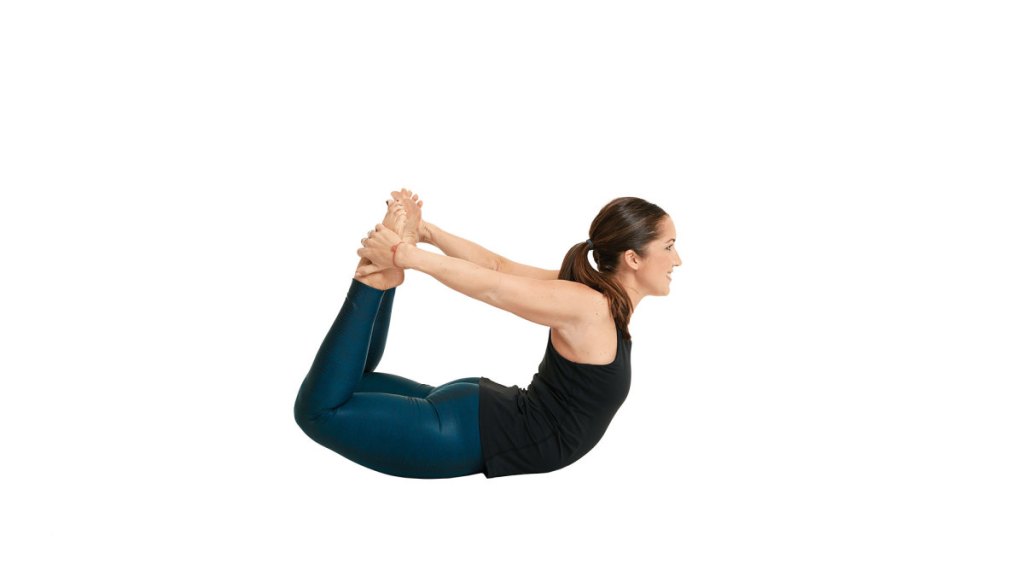
The word“”Dhanurasanacomes from the SanskritDhanura which means “bow” andasana meaning“asana.” This yoga posture is named after the shape of the bow.“Above emotions can be expressed in this physical posture as we melt and accept, soft stretch, and mold our body in a strong bow.connected with Urdhva Chakrasana Happened, Dhanurasana combines Cobra and Locust posture and counter forward Bends and plows. Like the
archer’s bow, or Arjuna as advised by Lord Krishna in the Mahabharata, this position gives stability and confidence. One has to pull back and hold the legs, then lift the head, chest and thighs together to form a curve or bow shape. This asana improves vitality, spinal elasticity and posture. This spine. Tones the muscles of the spine, works each part of the spine – the cervix, lumbar, thoracic and sacrum. As the chest is fully bent and the lungs expanded, we increase the strength and capacity of the lungs.increase in.
eighth posts Keanukrm, TheHatha Yoga 12 original The three back-enhancing Last of the exercises. Produces bow confidence. Moreover, it will break like a real bow, which is too much stress, and significant stress Without, there will not be enough force to launch the arrow, therefore, this posture requires the right balance of effort and relaxation.
Dhanurasana should be practiced after the use of followed by a reclining Bhujangasana (cobra) and Shalabhasana (grasshopper) posture as a counter-stretch.
To perform this asana, you need to lie down on your abdomen, forehead on the floor, legs together and arms by your sides.
- Bend/fold the knees, bringing the feet as close to the posterior as possible.
- Grasp either your feet or ankles with the hands. Knees and thighs should be as close together as possible. If one is not able to keep them together, then separate as much as needed.
- Press the heels into the hand so that the latter press against the action.
- Altogether, lift the head chest and thighs off the floor.
- Ensure that the tailbone is kept pressed towards the back of the knees and press the shoulder blades firmly down the back.
- Keep your elbows straight, with the arms fully stretched and the weight of the body on the abdomen. Do not rock back on the hips.
- Breathing in and out smoothly, ensure your chest is well off the ground and your legs are pulled up. Even if the thighs come apart, try and keep the big toes of both feet together or close. Keep the head lifted, looking upwards . Maintain the posture for 5 long breaths ensuring that the right amount of effort is being used. Your body should be as taut as a bow.
- After the five breaths, release and gently bring the legs and chest to the ground. Let go of the ankles and relax.
 Samadhi Yoga Ashram | Yoga Teacher Training in Rishikesh